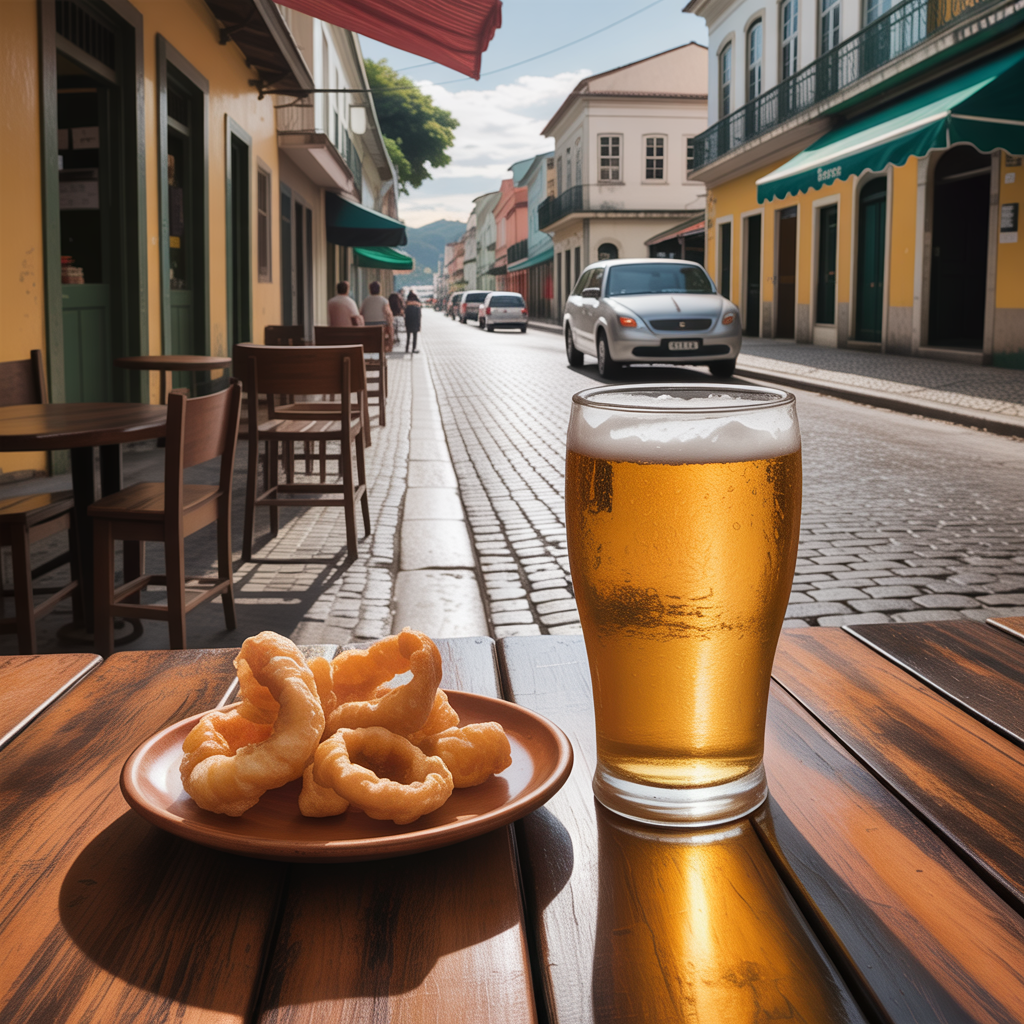
BH petisco by petisco: a guide to the botecos that define the city
In no other Brazilian city is the boteco taken so seriously. An afternoon of petiscos in BH is an intensive course in mineiro culture.
By gastronomizaê · Belo Horizonte, MG · 2026-04-14
There’s an unofficial theory about Belo Horizonte that circulates among those who know it well: the city was planned with wide sidewalks, generous trees, and mild temperatures because its founders already knew that mineiros would spend most of their time sitting at boteco tables. There’s no way to prove this theory. But it’s hard to sit on a sidewalk in Prado or Savassi on a Thursday afternoon, petisco in hand and cold chope in front of you, and not be convinced that the city was built exactly for this.
BH has a relationship with the boteco that no other Brazilian city replicates. São Paulo has modern bars. Rio has pagode and beach botecos. BH has the boteco as a cultural institution — the place where business is done, where family fights are resolved, where football is discussed with the seriousness the subject deserves, and where you consistently eat some of the best-executed petiscos in the country.
What defines a good mineiro boteco
The hierarchy begins with torresmo. In BH, torresmo isn’t a supporting act — it’s a thermometer. If a place’s torresmo arrives limp, without crunch, with excessive fat that wasn’t properly worked, the rest of the menu will probably disappoint. Good torresmo in BH: inflated skin, crunchy like glass, fat rendered to the bone, sprinkled with coarse salt and served hot. That’s the standard.
Then comes bolinho de bacalhau — but the mineiro, who has their quarrel with carioca tradition, makes a bolinho that sometimes substitutes part of the cod with batata baroa or cassava, creating a moister texture and more earthy flavor. It’s not better or worse — it’s different, and it’s from here.
The croquete de carne seca with requeijão mineiro closes the basic trio. In some historic botecos in the city, this croquette has a decades-old recipe, tested and refined to the point where each bite has the exact proportion between the fried shell and creamy interior.
Mercado Central as ground zero
Any serious boteco guide in BH begins at the Mercado Central. Not as a tourist point — as gastronomic orientation. The petiscos sold by the market bars reflect what mineiro artisanal production offers: cheeses from Canastra and Serro side by side, smoked sausage from interior producers, doces de leite in variations that most Brazilians don’t know exist.
The market is also the place where you eat the classic mineiro breakfast: biscoito de polvilho fresh from the oven, requeijão de cumbuca, broa de fubá. At seven in the morning, with the city still waking up, it’s hard to find better breakfast anywhere in Brazil.
The addresses that endure
Boca da Noite, Centro: Since 1963 on the same corner of Rua Sapucaí, Boca da Noite serves what can be called canonical mineiro petisco. The atmosphere hasn’t changed much in sixty years — formica tables, plastic chairs, chalkboard on the wall. The torresmo is the best in the city according to a never-formalized but widely accepted consensus. The fried chicken foot, a petisco that exists on practically no menu outside Minas, here appears golden and seasoned with garlic and lemon, served for eight reais.
Maletta, Funcionários: The bar on the ground floor of Edifício Maletta — a modernist building with dense cultural history — has permanently cold chope and a kitchen that never forgets it’s in a boteco, not a restaurant. The pernil sandwich with freshly cut vinagrete is mandatory.
Bar do Rubão, Santa Tereza: In the neighborhood that is BH’s bohemian cultural center, Bar do Rubão is the type of place that exists on two lists: “places every tourist should visit” and “places where neighborhood residents drink every week.” Rarely does an address occupy both with merit. The grilled octopus with olive oil and limão-siciliano entered the menu five years ago and is already as classic as the joelho de porco that was there before.
The beer that helped redefine the boteco
BH is today one of Brazil’s craft beer capitals. Breweries like Wäls, Backer, and dozens of local micro-producers transformed what’s on tap at many of the city’s botecos. The result is an artisanal beer offering spread across botecos that until ten years ago served exclusively industrial lager — and today present IPAs, stouts, and saisons alongside traditional chope, without artificiality.
This changes the petisco dynamic. The bitterness of an IPA calls for fatty petiscos. Torresmo, which is always fatty, became even better when it gained this pairing partner. The city realized this before any sommelier formalized the observation.
Comida di Buteco as an annual rite
Once a year, BH stops for Comida di Buteco — a festival that since 1999 has mobilized dozens of botecos in competition for the best exclusive petisco. The festival, which began in the capital and now has editions in other cities, revealed kitchen talents who would never pass through culinary school and never need to: they learned in the boteco itself, refining recipe by recipe until reaching the dish that won the competition.
Each edition’s winning petisco enters the establishment’s permanent menu, creating an edible timeline of the city’s boteco creativity.
Why this matters beyond pleasure
The mineiro boteco is a unique social laboratory. It has no dress code, no reserved line for instagrammers, no twelve-step tasting menu. It has shared tables where you sit next to strangers, petisco that comes out quickly because it’s ready, and chope that never waits more than two minutes.
This informal democracy is part of the product. Sitting in a BH boteco is participating in a social equalization ritual that the city practices with distractedly relaxed seriousness. In this city, the petisco is the most convincing argument for the abolition of hierarchies.
This may not have been the founders’ plan. But it worked.