A rabada is patience condensed. You don’t rush a rabada — you wait for it to decide, in its own time, to release the meat from the bone and surrender all the collagen it accumulated in a lifetime of movement. A perfectly cooked rabada has that texture you can’t describe to someone who’s never eaten it: dense and falling apart at the same time, with a broth that clings to the palate like a promise fulfilled.
Transforming rabada into croquette is a decision that requires culinary courage. You take all that patience accumulated in the pot, shred the meat, wrap it in bechamel perfumed with the cooking broth itself, shape, bread, fry. If it works — and at Nicolau Bar, it works — the croquette encapsulates the rabada without betraying what it is.
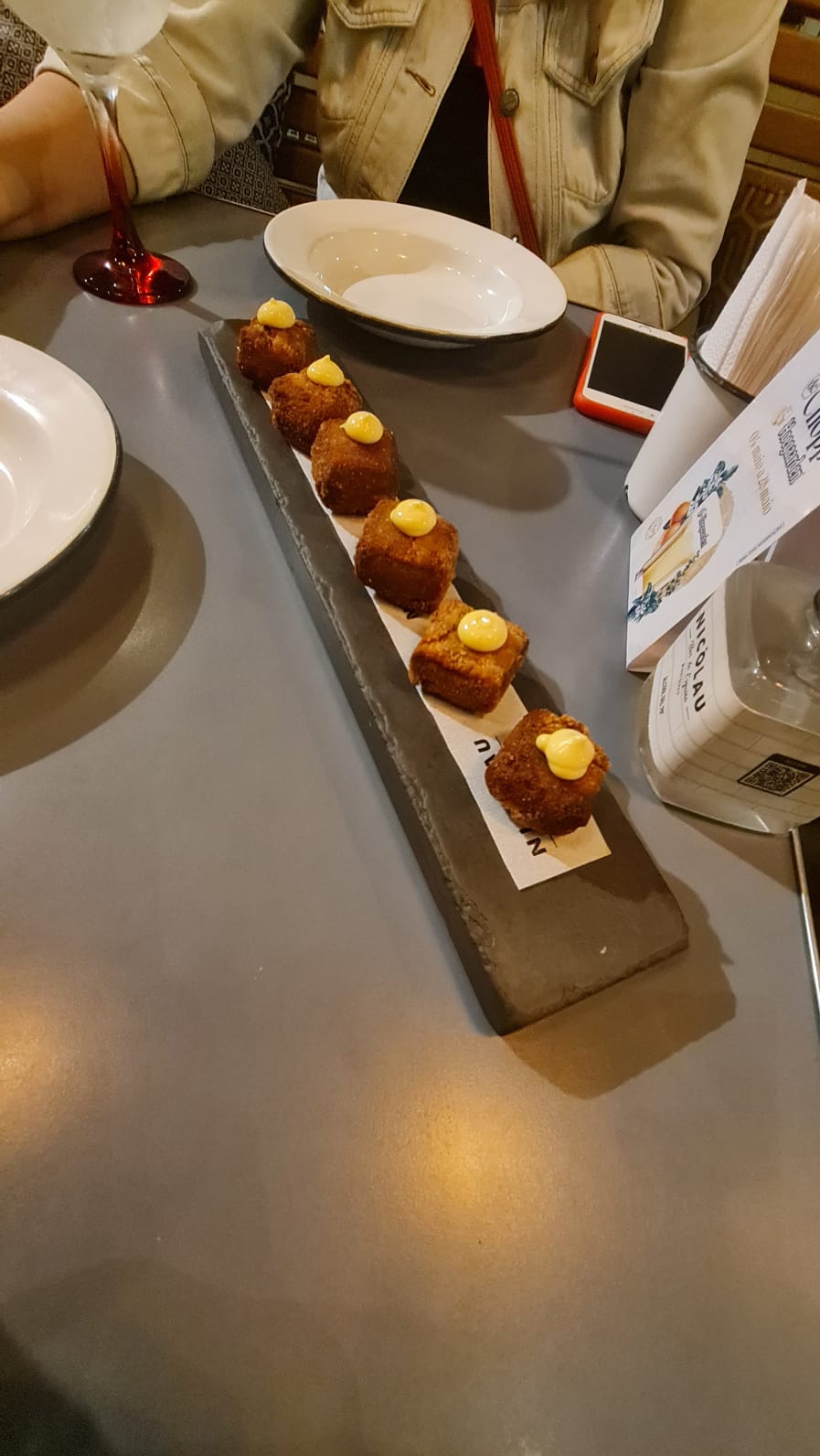
The row of seven croquettes on long slate is gastronomic geometry: each piece equally golden, each quenelle of yellow aioli positioned precisely next to each croquette. The linear presentation isn’t arrogant — it’s the way of saying that the product is good enough not to need distraction.
The long slate as support isn’t accidental: it requires you to look at all seven at once before beginning. It creates anticipation before the first bite.
The shell crackles when broken. Inside, the shredded rabada still has presence — it wasn’t ground into paste, it maintained texture. The yellow aioli balances the meat’s richness with lemon’s acidity and garlic’s punch.
Rabada has a long history in Brazilian cuisine that passes through the Portuguese tradition of total animal utilization. The oxtail, the part that the most precious consumer refuses, concentrates collagen and fat in a proportion that no noble cut can reproduce. When well-made, it produces a dense broth that sticks to the lips — the same collagen that gives body to the broth is what makes the croquette’s bechamel so rich.
Nicolau Bar da Esquina is part of a generation of BH bars that took seriously the idea of petisco as product. Not as an excuse to sell beer, but as a reason to exist on its own merit. The rabada croquette is the clearest example: it requires two days of work before going to the pan. No bar that doesn’t believe in what it does sustains this process.
The long slate, the seven aligned croquettes, the precise aioli beside each one — this isn’t Instagram staging. It’s the presentation of a product that was made with care and deserves to be seen with the same care.
Seven croquettes to share or not to share. That’s the only decision that matters.
Technical Details
- Location: Nicolau Bar da Esquina, Belo Horizonte, MG
- Category: Rua & Boteco
- Average Price: R$ 40–70 per person
- Rating: ⭐ (5/5) — rabada croquette with precise shell, filling that preserves the meat, elegant presentation