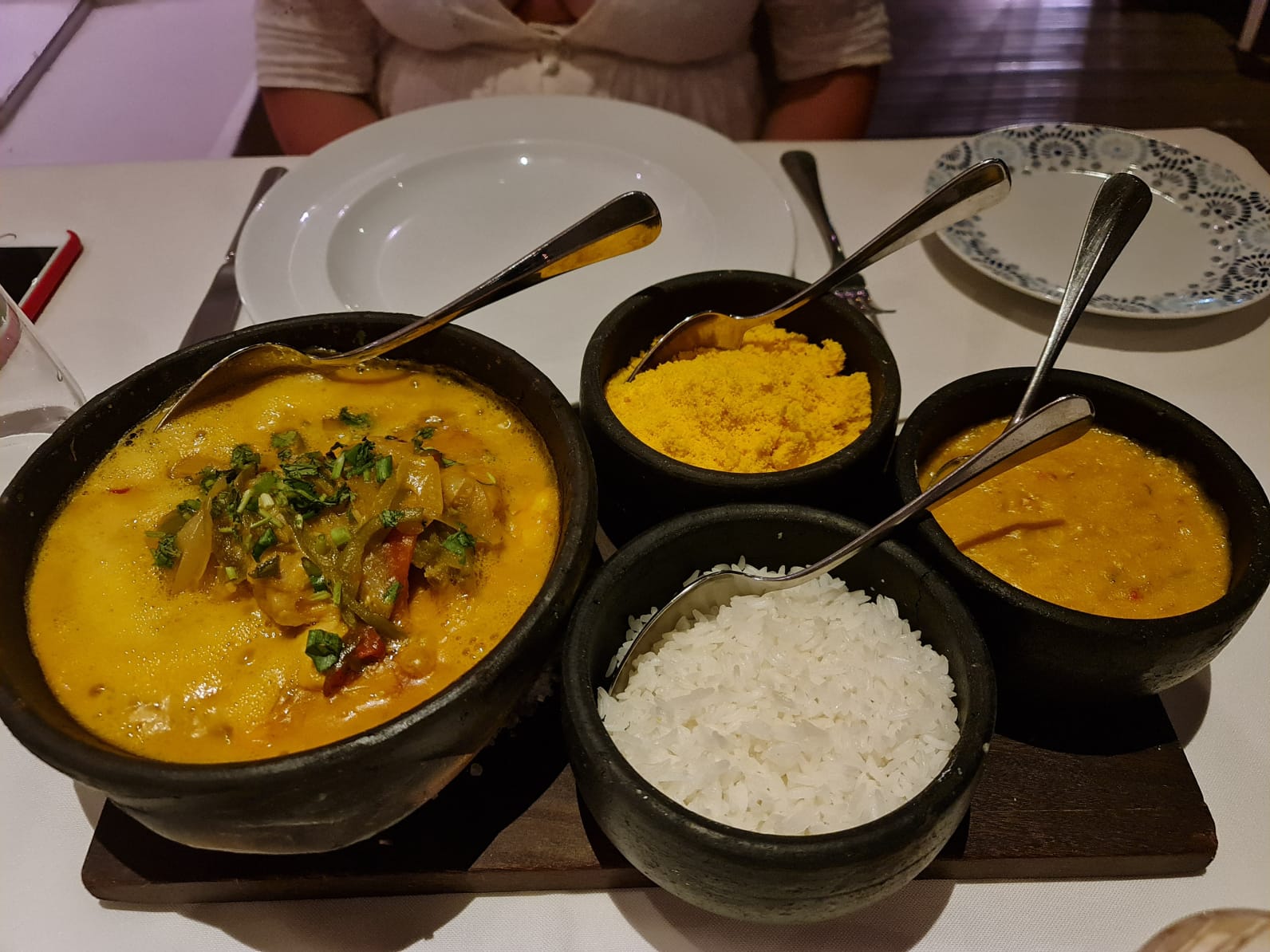
There’s a specific mise en scène that Amado practices with moqueca: five black iron pots arrive on a wooden board at the table. Each pot has its own function. The service ritual begins before the first spoonful.
The main pot holds the moqueca itself — the creamy yellow dendê broth with seafood, hot, fragrant, with that steam that carries the scent of palm oil combined with coconut milk and Bahian seasoning. Inside, the seafood: shrimp, possibly fish, maybe mussels — each cooked in the broth but preserving its individual texture.
The other pots hold the accompaniments: the pirão, which is the moqueca broth thickened with cassava flour until it reaches that consistency between liquid and solid that embraces any protein; the banana farofa, with the sweetness of caramelized fruit mixed with toasted flour; the loose white rice, grain by grain, which exists to balance the richness of the dendê; the pure dendê sauce for those who need more.
Bahian moqueca is not a dish — it’s a system. Each element converses with the others. The farofa swallows the broth. The pirão thickens the flavor. The rice rests between intense bites.
Dendê deserves a pause. Not just any palm oil works in a moqueca — it’s Bahian dendê, extracted from the fruit of the Elaeis guineensis palm tree, which arrived in Brazil together with enslaved Africans and became the most identity-defining ingredient of the state’s cuisine. Its flavor is unmistakable: earthy, slightly bitter, with a fat that coats the palate differently from any other oil. Using bad dendê or the wrong amount is the error that betrays fake moqueca from the real thing.
Amado sits with a view of the Baía de Todos-os-Santos, in the Comércio neighborhood, in one of the city’s most privileged positions. Eating moqueca there, with the sea in front, has something of completeness that no restaurant without a view can offer. You look outside and understand where the ingredient came from — the same bay that fed Salvador for centuries is in the window while you eat.
The ritual of five pots is not theater. It’s pedagogy. It forces the diner to assemble the plate at their own pace, in their preferred proportion, repeating the accompaniments that please them most. No waitress will rush you. No plate will arrive cold because the service was designed to preserve temperature.
Five pots. One bay. A respectful moqueca.
Technical Information
- Location: Restaurante Amado, Salvador, BA
- Category: Bahian Cuisine / Moqueca
- Average Price: R$ 120–200 per person
- Rating: ⭐ (5/5) — moqueca with impeccable service ritual, complete accompaniments, bay view