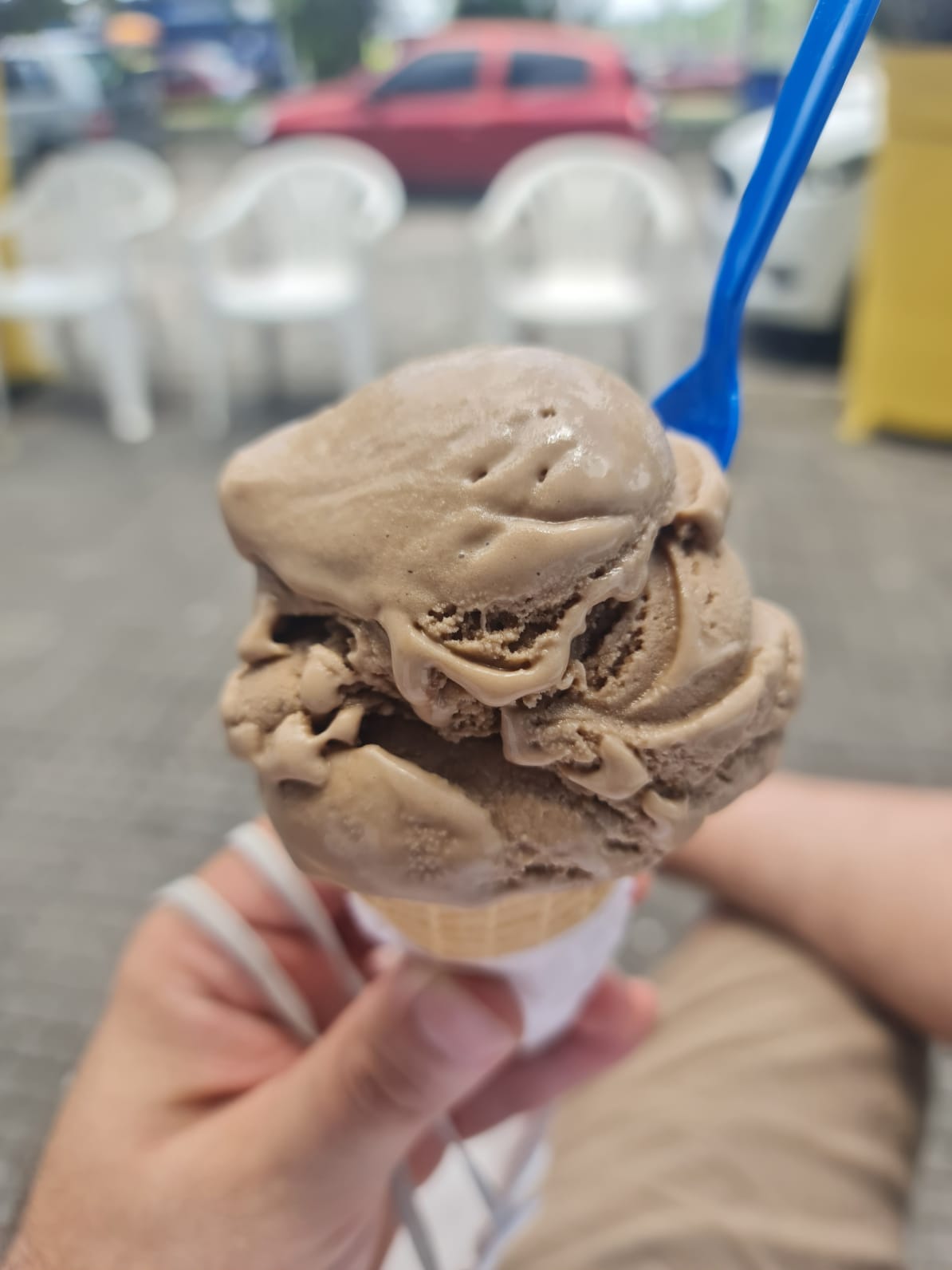
There are gastronomic stops that need no explanation. You don’t need to understand the technique, you don’t need to know the producer, you don’t need historical context. You just need to be in Salvador, be in Ribeira or by the waterfront, and accept the sorvete de coco queimado when it appears before you.
The ice cream arrives on a blue spoon — that specific blue that the memory of Bahian street ice cream preserves with precision. The scoop’s color is beige with burnt tones: not the light and smooth beige of fresh coconut, but the dark beige with caramel veins where the coconut was toasted until releasing its sugars and developing complexity. The creamy texture of something made artisanally, churned with patience until air incorporates uniformly.
The flavor begins with coconut — that clean, slightly sweetened taste of the pulp — and transforms as the toasted notes appear. The gentle bitterness of burnt sugar that darkens without becoming excessively bitter. The natural fat of the coconut that envelops the palate with that richness no industrial ice cream can reproduce.
The sorvete de coco queimado in Ribeira isn’t the best ice cream in the world. It’s the best ice cream of that moment, that place, that Bahian coastal breeze.
The rustic presentation — the generous blue spoon, without wafer, without additional syrup, without garnish — is part of the concept. There’s nothing here to disguise the product. The coco queimado carries the dish alone.
Ribeira is a Salvador neighborhood that lives to the rhythm of the waterfront. Fishermen in the morning, bars in the afternoon, families on weekends. The ice cream has existed in this context for decades — passed through generations, resisted trends, survived the industrialized açaí that took over every corner of the country. Not because it’s resistant to fashion, but because it’s better than fashion.
The artisanal process that produces this texture has no shortcuts. Fresh coconut pulp is toasted at controlled temperature until developing the Maillard compounds that create that color and complexity. Then it’s incorporated into the ice cream base and churned slowly — much slower than industrial machines that inject excess air to increase volume and reduce cost. The result is a dense ice cream that weighs heavy on the spoon, takes longer to melt, and has flavor until the last bite.
When someone tells you they know a better coconut ice cream in Salvador, listen. Then come here anyway.
Mandatory stop isn’t a marketing title. It’s instruction.
Technical Details
- Location: Sorvete da Ribeira, Salvador, BA
- Category: Ice Cream / Street Food
- Average Price: R$ 10–20 per serving
- Rating: ⭐ (5/5) — artisanal ice cream with genuine flavor, coco queimado as Bahian signature